
Electronics and Communication Engineering
The
Electronics and Communication Engineering department was started in the year
2001. The department offers B.Tech program that provide students with the
knowledge and tools they need to succeed in the Electronics and Communication
Engineering. Electronics engineering deals with implementation of applications,
principles and algorithms developed among many related fields, for example
solid-state physics, radio engineering, telecommunications, control systems,
signal processing, systems engineering, computer engineering, instrumentation
engineering, electric power control, robotics, and many others. The curriculum
is so designed as to give adequate emphasis on the digital processing of
information for efficient communication over noisy channels. This branch of
Engineering has a key place in the field of computers, Information Technology,
Electrical, power system operations, communication systems etc. Hence the job
opportunities for Electronics and communication engineers are wide spread
across the world.
The
Department of Electronics and Communication Engineering has always retained
high standards and expectations for academic achievement. The department is now
meeting the requirement of technological challenges & the technical man
power requirement through its updated course curriculum, experienced faculty
members, skilled supporting staffs, and with the help of sophisticated
laboratories. The department has been strengthened by its reputed faculty
members including Ph.Ds from internationally recognized Universities and
organizations. The department has expertise in the areas of Optical Fiber
Communication, DSP & Embedded systems, Microelectronics, Instrumentation,
Computer Networking, Information Security, Wireless Communication, Microwave
Engineering etc. The Department has dedicated faculty members, engaged to
enhance the knowledge, skill & talents of the students. Salient Features
Well equipped laboratories with modern state of the art facilities.
Highlights
Empowering students with regular workshops and add on courses.
Unending list of University toppers and entrepreneurs.
Eminent teaching faculty with a blend of industrial exposure, teaching and research experiences.
Consistent and excellent results in university examinations.
Well-equipped research laboratory with modern instruments and tools like Microwave bench, Klystrons, Spartan FPGA Kits, ASIC, RTOS, Arduino and IoT Development Kits, Xilinx VIVADO System Edition, Keil, MAT Lab, EDWin XP, Cadance ORCAD etc., ensuring our students to meet industrial standards.
Extensive industrial collaborations with more than 25 companies by means of Memorandum of Understandings (MoU) and Arrangements (MoA).
Exclusive tie-up with Entrepreneurship Development Cell to promote self-sustained entrepreneurial career options of students.
Hobby Clubs support knowledge expansion and skill development of students.
Placement in top multi-national companies (TCS, Infosys, Cisco, Wipro, Accenture, Orion, Tessolve, Poornam, VVDN Technologies and so on).
Professional bodies like IEEE, IET, IE, ICFOSS etc. are actively running in our department to focus more on career and research oriented education.
Department Association, AZTECS guarantees to carry out activities which assure employability in a highly competent world.
National Conference on Information and Communication Engineering (NCICE) being organized every year to promote research publications of teaching professionals, research scholars and students.
Courses and Intake Capacity
The approved intake for the B.Tech in Electronics & Communication Engineering program is 60 students per academic year.
Programs Offered
| Courses Offered | Intake |
| B.Tech in Electronics & Communication Engineering | 60 |
| B.Tech in Electronics & Computer Engineering | 30 |
Key SDGs Linked to ECE
SDG 4: Quality Education
- ECE enables e-learning platforms, virtual classrooms, and MOOCs
- Technologies: communication networks, IoT-based smart classrooms
SDG 7: Affordable and Clean Energy
- ECE supports renewable energy systems and smart grids
- Power electronics for efficient energy conversion
- Embedded systems for solar/wind monitoring and optimization
SDG 8: Decent Work and Economic Growth
- Growth of telecommunication, semiconductor, and embedded industries
- Job creation in electronics manufacturing and IT sectors
- Supports innovation and entrepreneurship
SDG 9: Industry, Innovation, and Infrastructure
- Core ECE contribution: communication networks (4G/5G), IoT, automation
- Development of smart infrastructure and industrial systems
- Backbone of digital transformation
SDG 11: Sustainable Cities and Communities
- Smart city solutions using sensors, IoT, and communication systems
- Intelligent transport systems and traffic control
- Disaster management and public safety technologies
SDG 12: Responsible Consumption and Production
- Development of energy-efficient and low-power electronics
- E-waste management and sustainable product design
- Promotes green engineering practices
SDG 13: Climate Action
- Environmental monitoring using sensors and satellite communication
- Climate data collection and early warning systems
- Supports mitigation and adaptation strategies
SDG 3: Good Health and Well-being
- Biomedical electronics and telemedicine systems
- Wearable health monitoring devices
- Medical imaging and diagnostic systems
Optional: Hostel Fees
₹6,500 / month (Includes accommodation & mess)
One-time deposit: ₹10,000 (Refundable)
Provide theoretical & practical knowledge through quality education to work in a collaborative environment following ethical practices.
Establish the state-of-the-art laboratories to facilitate research, innovation and entrepreneurship.
Upgrade the knowledge and skills to be on par with the advancements in technology to address the challenging societal needs.
PEO 1: Graduates will be capable of applying engineering knowledge in various fields of electronics and communication engineering and getting deployed globally.
PEO 2: Graduates will be capable of adaptable to the rapid changes in technology through lifelong learning.
PEO 3: Graduates will be able to work successfully with positive attitude in collaborative and multi-disciplinary environments as leaders, entrepreneurs and researchers upholding professionalism and ethics.
Graduates will be able to :
PSO 1: Test, analyze, prototype and design electronic devices, circuits and systems that perform analog and digital signal processing and control operations.
PSO 2: Design and implement communication systems, specify appropriate technologies for real-time applications and solve complex communication engineering problems
Engineering graduate will be able to:
Engineering Knowledge: Apply the knowledge of mathematics, science, engineering Fundamentals, and an engineering specialization to the solution of complex engineering problems.
Problem Analysis: Identify, formulate, review research literature, and analyze complex engineering problems reaching substantiated conclusions using first principles of mathematics, natural sciences, and engineering sciences.
Design/ Development of Solutions: Design solutions for complex engineering problems and design system components or processes that meet the specified needs with appropriate consideration for the public health and safety, and the cultural, societal, and environmental considerations.
Conduct Investigations of Complex Problems: Use research-based knowledge and research methods including design of experiments, analysis and interpretation of data, and synthesis of the information to provide valid conclusions.
Modern Tool Usage: Create, select, and apply appropriate techniques, resources, and modern engineering and IT tools including prediction and modelling to complex engineering activities with an understanding of the limitations.
The Engineer and Society: Apply reasoning informed by the contextual knowledge to assess societal, health, safety, legal and cultural issues and the consequent responsibilities relevant to the professional engineering practice.
Environment and Sustainability: Understand the impact of the professional engineering solutions in societal and environmental contexts, and demonstrate the knowledge of, and need for sustainable development.
Ethics: Apply ethical principles and commit to professional ethics and responsibilities and norms of the engineering practice.
Individual and Team Work: Function effectively as an individual, and as a member or leader in diverse teams, and in multidisciplinary settings.
Communication: Communicate effectively on complex engineering activities with the engineering community and with society at large, such as, being able to comprehend and write effective reports and design documentation, make effective presentations, and give and receive clear instructions.
Project Management and Finance: Demonstrate knowledge and understanding of the engineering and management principles and apply these to one’s own work, as a member and leader in a team, to manage projects and in multidisciplinary environments.
Life-long learning: Recognize the need for, and have the preparation and ability to engage in independent and life-long learning in the broadest context of technological change.
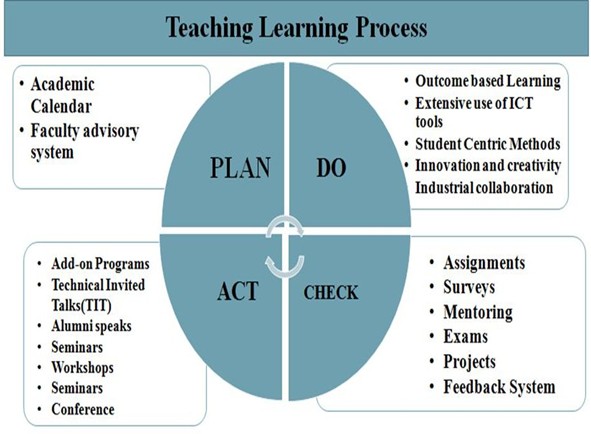
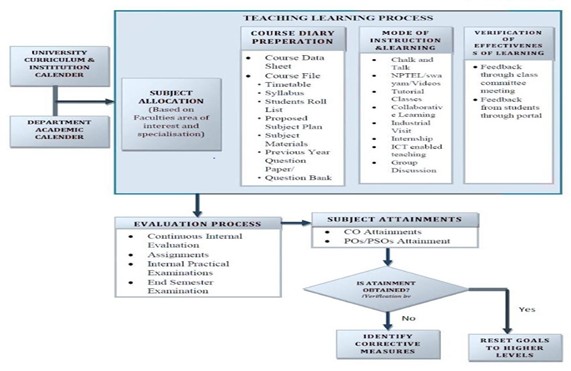
We adopt a structured and
outcome-based approach to ensure the effectiveness and quality of its
teaching–learning processes. All academic activities are systematically planned
and executed in alignment with the institute’s academic calendar, which is
prepared well in advance and communicated to all stakeholders. The academic
calendar clearly defines the schedule for commencement of classes, internal
assessments, laboratory sessions, seminars, and co-curricular activities etc.
This systematic planning ensures consistency, effective implementation of the
curriculum, and timely completion of the syllabus, thereby enhancing the
overall teaching–learning experience and attainment of course outcomes.
Instruction methods using pedagogical initiatives
Use of
various instructional methods and pedagogical initiatives
Teaching
Initiatives:
The instructional methods
adopted are as follows:
·
Chalk and Talk
·
Google classroom/Slide Share/Lecture Videos
·
ICT enabled
Teaching
·
Assignments
·
Tutorials
·
Group Discussion
Chalk-and-Talk
Method
The
traditional chalk-and-talk method remains a core component of the
teaching–learning process. Faculty members make extensive use of the board to explain derivations, circuit
diagrams, algorithms, and step-by-step problem-solving approaches. This method
supports:
·
Better conceptual clarity, especially in analytical and design-oriented
subjects.
·
Real-time interaction, encouraging students to ask questions
and seek clarification.
·
Active engagement, as learners follow
the logical development of concepts.
·
Improved attention and retention, due to
the structured pace of content delivery.
To complement this, faculty also incorporate audio-visual tools such
as animations, simulations, demonstration videos, and NPTEL content, ensuring a
balanced and effective blended-learning environment.
Google Classroom and College Website –
Digital Content Delivery
The department uses Google Classroom
along with the official website
to systematically distribute and archive course-related digital materials.
Faculty members upload the following resources on Google Classroom and the
website:
·
PowerPoint presentations
·
Course handouts
and lecture notes
·
Question banks
and tutorial sheets
·
Previous
year university question
papers
·
Lab manuals,
experimental procedure videos,
and sample outputs
·
Additional reference materials and reading
resources
These materials remain accessible to students at any time,
supporting self-paced learning and easy revision. Important class
announcements, assignment instructions, and academic updates are also posted
regularly.
In addition, faculty members maintain YouTube channels to upload
lecture snippets, lab demonstration videos, problem-solving discussions, and
supplementary explanations. These videos are made publicly accessible to
enable:
·
Peer review and academic
scrutiny
·
Constructive feedback
for quality enhancement
·
Easy access
for slow and advanced
learners
Tutorial
As per APJAKTU regulations, tutorial sessions are conducted for subjects that involve extensive problem-solving. One hour per week is exclusively allotted for tutorials. Two faculty members handle each tutorial session—one being the course instructor and the other assigned by the HoD based on subject expertise.
Students are divided into small groups, and each group is given a
set of questions tailored to their learning
needs. They are required to
solve the assigned problems during the tutorial hour itself and submit their
answers for evaluation at the end of the session.
ii). Instruction methods
using pedagogical initiatives
Real-world examples
and case studies are regularly integrated into classroom teaching to help
students relate theoretical concepts to practical engineering applications. For
subjects such as Microcontrollers and Digital Electronics, case studies like Arduino/ARM-based embedded system design, interrupt handling, I/O interfacing, and digital system implementation using logic
families are used to
illustrate how modern electronic
systems operate in real-world environments.
These examples demonstrate concepts such as
instruction execution, timing analysis, peripheral communication, combinational
and sequential circuit design, and hardware–software co-integration.
Furthermore, real-world
applications are reinforced through mini projects, main projects, industrial
visits, design and prototyping
activities, and exposure to
sustainable engineering practices. These pedagogical initiatives provide
students with hands-on experience, enable them to understand industry
workflows, and equip them to apply electronics engineering principles to
develop practical, innovative, and socially relevant solutions.
Collaborative Learning
Collaborative learning methods such as
industrial training, technical workshops, Technical sessions, peer learning
activities, and group-based problem-solving tasks are regularly conducted to
promote teamwork, critical thinking, and practical exposure. These initiatives
enable students to interact with industry professionals, gain hands-on
experience with emerging technologies, and apply theoretical knowledge to real-world engineering
scenarios, thereby strengthening their overall learning experience. Figure2.1.10
shows the brochure of the technical talk conducted by the department.
iii).
Quality of Laboratory Experience
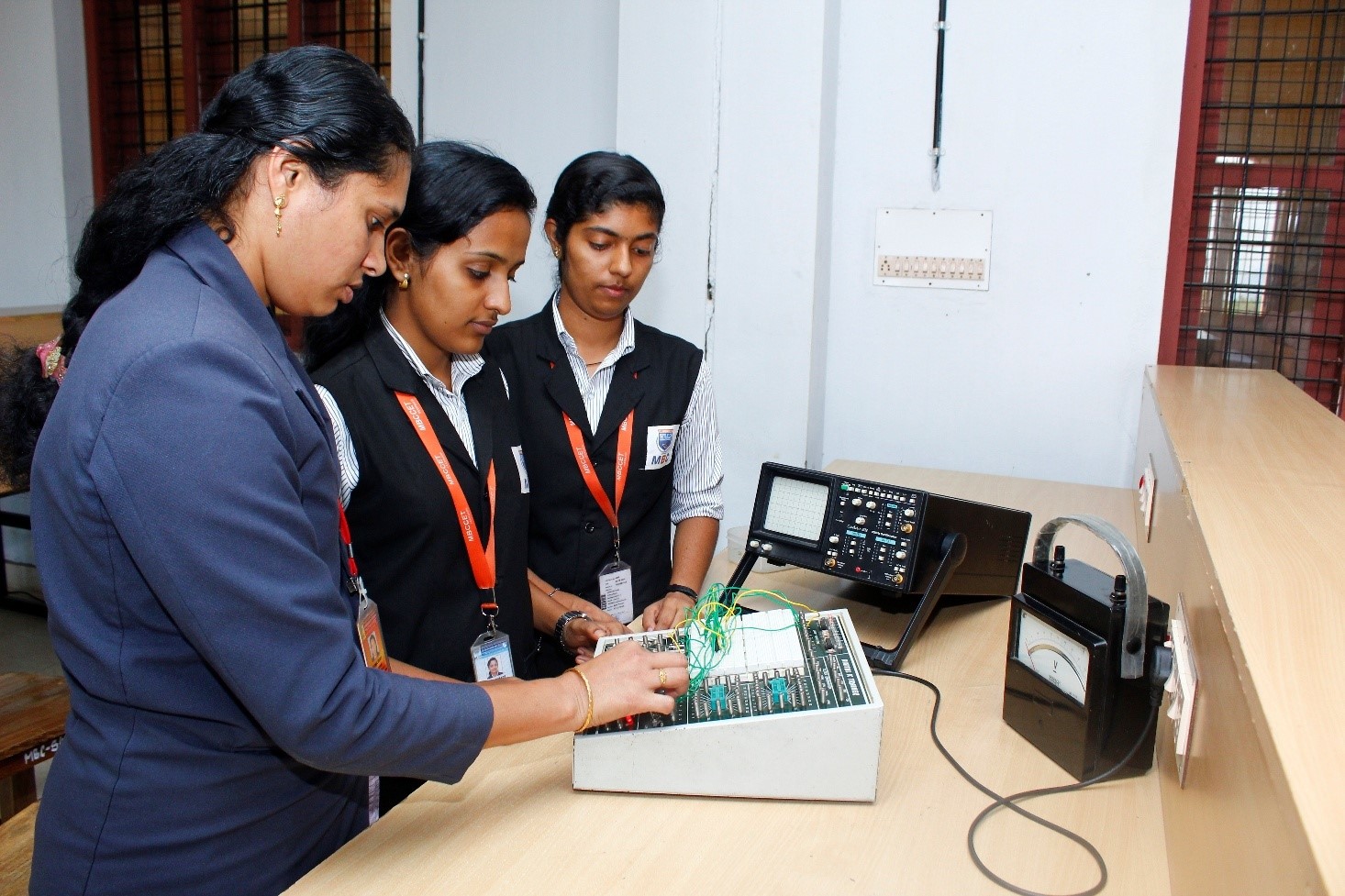
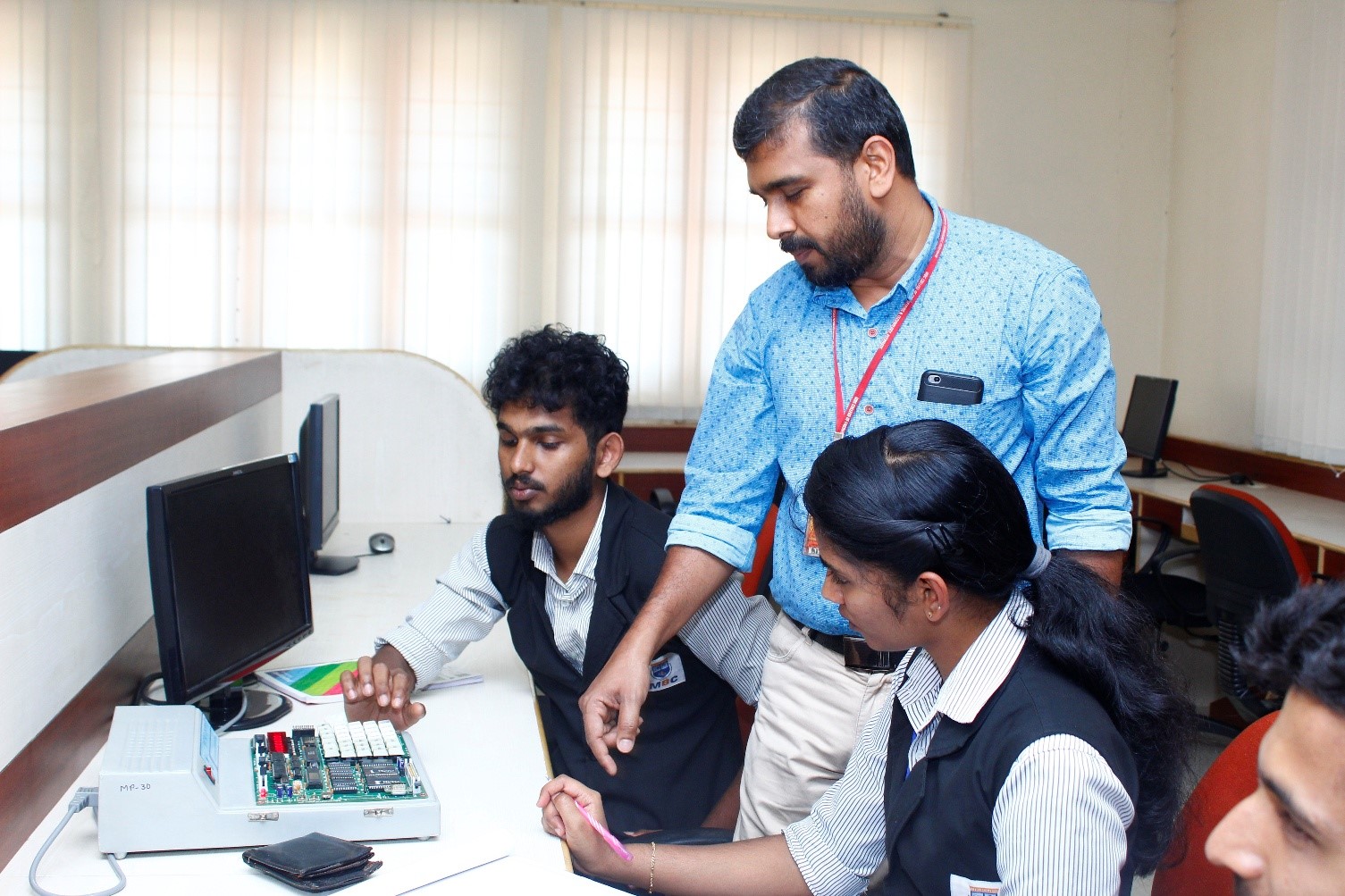
Each laboratory session in the Electronics and
Communication Engineering Department is meticulously designed to help students
translate theoretical knowledge in electronics and communication engineering
into practical skills using industry-relevant hardware platforms, simulation
tools, and measurement instruments. Students are systematically trained to
design, assemble, and test electronic circuits; configure and program
microcontrollers; analyse signals and waveforms; and evaluate the performance
of communication systems under various operating conditions.
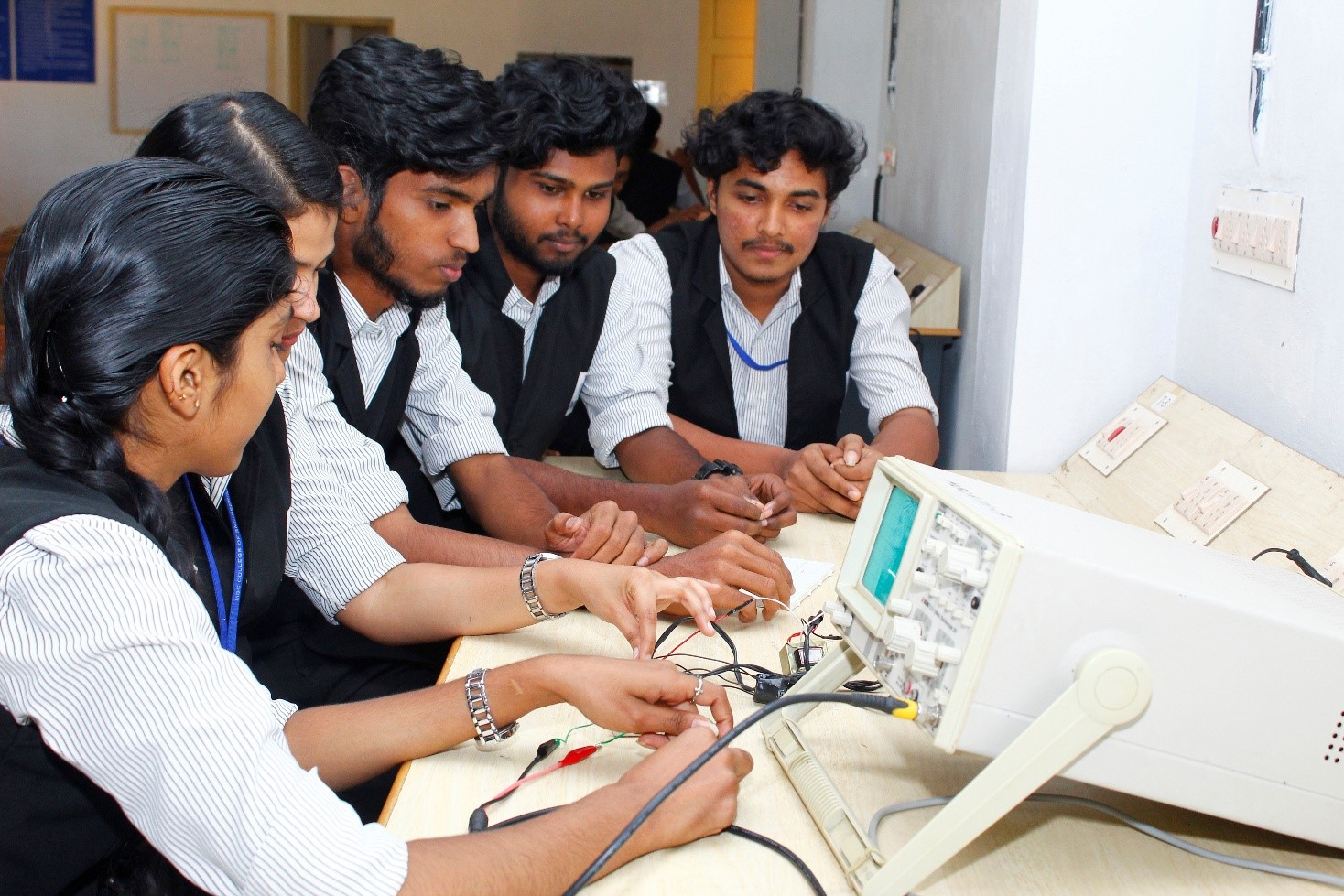
In laboratories such as Electronic
Circuits, Digital Electronics, Analog & Digital Communication, and
Microcontroller & Embedded Systems, students work with modern tools and
platforms including DSOs, signal/function generators, digital multimeters,
regulated power supplies, logic analyzers, spectrum analyzers, Keil µVision,
MPLAB, Arduino IDE, MATLAB/Simulink, Proteus, and Multisim. These tools enable
them to perform step-by-step debugging, simulation, real-time monitoring, and
validation of circuit behaviour. Students also gain hands-on exposure to
microcontroller architectures such as 8051, PIC, AVR, and ARM, and learn
peripheral interfacing, I/O programming, communication protocols, and embedded
system development.
A strong emphasis is placed on accurate and
disciplined documentation. Students maintain a comprehensive laboratory record
that includes problem statements, circuit and block diagrams, truth tables,
timing diagrams, algorithms/flowcharts, assembly/C source code, simulation
results, measured values, waveform observations, tabulated data, performance
calculations, and interpretations of outcomes. This practice strengthens their
analytical, design, and troubleshooting abilities.
To ensure fairness, transparency,
and consistency in assessment, continuous evaluation rubrics
are used throughout the
semester. These rubrics evaluate key parameters such as:
·
Preparation and understanding of experiment objectives
·
Accuracy of circuit implementation and programming
·
Logical reasoning, analytical skills, and debugging capability
·
Precision in measurements and interpretation of waveforms
·
Quality, clarity,
and organization of
documentation
·
Teamwork, laboratory discipline, and adherence to
safety norms
·
Use of good
engineering and ethical
practices
Faculty members provide
timely, constructive feedback
to help students refine both their conceptual understanding and technical competencies.
Both internal and external laboratory
examinations incorporate a structured viva voce, where students are required to
justify their circuit design choices, explain algorithms and interfacing
methodology, discuss error sources and correction strategies, interpret
results, and demonstrate conceptual clarity. Laboratory records are evaluated
for completeness, technical correctness, neatness, and depth of analysis.
This comprehensive and practice-oriented pedagogical framework ensures that B.Tech Electronics and Communication Engineering students develop strong hands-on expertise, analytical thinking, design proficiency, and confidence in applying core electronics and communication engineering concepts to solve real-world engineering problems.
iv).
Course Mapping of COs
with Program Outcomes (POs)
The Course Outcome–Program Outcome (CO–PO) mapping matrix for each course is predefined and provided by APJ Abdul Kalam Technological University (KTU) as part of the official curriculum and syllabus framework. The CO–PO correlation levels, generally rated on a scale of 1 to 3 (Low, Medium, High), are prescribed by the University and remain unaltered at the institutional level. Faculty members are required to adopt this predefined matrix for all academic and assessment-related processes, including internal assessment design, question paper preparation, and attainment analysis. This standardized matrix serves as a crucial input in the computation of Program Outcome (PO) attainment, ensuring consistency and alignment between direct and indirect assessment methods across all courses.
Assessment Strategies
a)
Internal Exams
●
Mid-semester examinations are conducted
twice each semester as Series Test I and Series Test II which serve as an
integral component of the continuous assessment process, enabling systematic
monitoring of students’ academic progress and sustained engagement with the
course content.
●
For each test, the respective course
faculty prepares a minimum of two sets of question papers, each accompanied by
a detailed Evaluation Scheme and a
Question Paper Analysis Report based on Bloom’s Taxonomy. Every question is explicitly mapped to its
corresponding Course Outcome (CO) and cognitive level to ensure constructive
alignment.
●
The Department Scrutiny Committee reviews
all question papers to verify the adequacy of content coverage, appropriate
difficulty level, and alignment with the intended learning outcomes. Revisions,
if required, are suggested prior to final approval. Once approved, the question
papers are submitted to the Exam Cell, which manages the secure conduct of
examinations in accordance with the academic calendar and institutional
guidelines.
●
Following the evaluation, attainment
levels of the mapped COs are analyzed based on students’ performance in the
mid- semester examinations, providing valuable feedback for continuous
improvement in both teaching and learning processes.
b).
Assignment
Assignments constitute a crucial
component of the internal evaluation system for the department of electronics
and communication engineering designed to facilitate continuous assessment of
students’. The assignments are structured in diverse formats, including
descriptive and problem-solving questions, multiple-choice tests, oral quizzes, and mini-projects,
depending on the nature of the
course.
Each assignment is outcome-based, with
explicit mapping to the
corresponding Course Outcomes (COs)
to ensure alignment with the intended learning objectives. Student performance
is assessed on key parameters such as originality of work, timely submission,
and quality of content and presentation. Through this systematic and outcome-oriented
approach, the assignment process enables faculty to continuously monitor
students’ depth of comprehension, application of knowledge, and consistency in
learning throughout the semester, thereby reinforcing effective attainment of
course outcomes.
c). Addressing Learner
Diversity
The Department of Electronics and Communication
Engineering recognizes the varying learning
needs of students and implements systematic
strategies to support both slow and advanced learners, identified through
continuous academic performance evaluation.
·
Slow learners:
At our institution, the classification of slow learners
is based on the performance of students in the internal examinations. Although
APJ Abdul Kalam Technological University (KTU) prescribes 40% as the minimum
pass mark, the Department of Electronics and Communication has set a higher
benchmark of 50% to ensure stronger academic standards within the programme.
Accordingly, any student who secures below 50% in the internal assessments is
identified as a slow learner for departmental evaluation purposes.
Once identified, these students are
offered additional academic support. The Computer Science Department organizes
remedial classes, providing focused guidance, personalized attention to help
them strengthen their understanding of core concepts and improve their overall
academic performance. This structured approach ensures that students who
require extra assistance receive timely support,
enabling them to progress with confidence and meet the department’s expected
learning outcomes.
·
Advanced learners:
In
the Department of Electronics and Communication Engineering (ECE), the classification of advanced learners
is determined based on their performance in internal examinations.
Although APJ Abdul Kalam Technological University (KTU) prescribes 40% as the
minimum pass mark, the department upholds a higher academic benchmark by
considering 50% as the effective threshold. Students securing more than 50% in
internal assessments are identified as advanced learners.
To nurture their academic potential and promote
excellence, the department offers a range of enrichment opportunities. Advanced
learners are encouraged to explore research
and publication avenues,
enabling them to contribute to reputed journals,
national and international conferences, and student research forums.
They are also motivated to participate in electronics-based hackathons, circuit
design competitions, robotics challenges, IoT/embedded-system project contests,
and innovation-driven technical events. These platforms help strengthen their
analytical thinking, design capabilities, and technical proficiency.
Furthermore, advanced learners are
guided to take part in co-curricular and extra-curricular activities that
foster holistic development, leadership qualities, communication skills, and
teamwork—preparing them for higher studies, industry roles, and competitive
examinations.
v). Continuous Assessment and Feedback Mechanism
●
The department of Electronics and
Communication Engineering follows a robust Continuous Internal Evaluation (CIE)
system incorporating assignments, quizzes, presentations, and internal
examinations to assess students’ academic progress and outcome attainment.
●
Comprehensive feedback mechanisms help to
evaluate the effectiveness of teaching–learning processes and curriculum
relevance. Feedback is collected regularly from students, alumni, employers,
and industry experts, systematically analysed, and reviewed at both department
and institutional levels.
●
Student feedback is considered in each
semester for all theory, laboratory, seminar, and project courses. In cases of
unsatisfactory feedback, appropriate corrective measures—such as organizing
remedial classes, conducting additional sessions, or initiating peer- assisted
learning—are promptly implemented to enhance teaching quality and learning
outcomes.
vi) Quality Assurance and Monitoring
The Internal
Quality Assurance Cell (IQAC) and the Department
Quality Assurance Cell (DQAC), periodically review academic activities through
audits, lesson plan verifications, and classroom observations to ensure
teaching quality. Faculty members are encouraged to enhance their competencies by participating in Faculty Development Programs (FDPs),
workshops, and seminars on innovative teaching methodologies and technical
advancements.
The department has established a
well-organized system to assess the effectiveness and quality of its teaching and learning processes.
It is committed to continuously enhancing pedagogical methods to address the
evolving challenges of creating a learning environment that keeps mechanical engineering graduates
aligned with rapidly changing skill requirements, thereby improving their
employability and implementing corrective measures to address any identified
gaps. Different academic committees for ensure quality of teaching and learning
are listed below:
·
Class/Course Committee (CCs)
·
Stream Committee
·
Internal Audit Committee (IAC)
Class/Course committee
(CCs)
Class Committees are formed for each class and include the Head of the Department
(HOD), all faculty members handling
courses for that class, and student representatives. Serving as the
foundational level in the quality assurance framework for teaching and
learning, the Class Committee plays a crucial role in fostering open
discussions and constructive feedback on both curricular and co-curricular
aspects.
During meetings, typically held twice each
semester, members discuss matters such as the academic calendar, class
schedules, syllabus coverage, teaching effectiveness, instructional methods,
and available infrastructure.
When a common course is offered across multiple classes, a Course Committee
is also established. Its composition is similar to that of the Class Committee, with the addition of a senior
faculty member from a related department. Both committees are mandatory as per
KTU regulations.
Stream Committee
Stream Committee focus on
faculty specialized in each stream, ensure adequacy
of the content of the course delivery, quality and level of question papers for internal
assessment and syllabus coverage vis-à-vis the planned academic schedule. COs,
CO- PO and CO-PSO mappings for each course are prepared by corresponding faculty and discussed in
Stream Committee at the beginning of the semester. Stream Committee examines
COs, CO-PO and CO-PSO mappings with respect to the university syllabus and
critically analyse the feasibility of attaining reasonable level of COs and the
legitimacy of CO-PO and CO-PSO mappings. Corrections or modifications to COs,
CO-PO and CO/PSO mappings arrived after elaborating brainstorming and this
exercise get completed within the first week of the beginning of a semester.
Stream Committee convene before and after each internal examination to prepare
question paper, to monitor syllabus coverage
and to analyse student’s performance in the internal examinations. At the end
of the semester, when internal assessment is completed, faculty submits CO, PO
and PSO attainment levels for each course to corresponding Stream Committee.
Subsequently, the Stream Committee examine the same and figure out probable
causes for lower-than-expected levels of CO/PO/PSO attainments.
Internal Audit Committee (IAC)
This independent committee functions in
coordination with the institution-level Audit Cell to ensure that the
department’s academic activities fully comply with established procedures and
university regulations. It also collaborates with the external academic auditor
appointed by KTU, who visits twice each semester to evaluate the department’s
academic operations based on the following criteria:
·
Functioning of class committee
·
Attendance reports
of students
·
Quantity and quality of assignments
·
Conduct of tutorial
classes
·
Syllabus coverage
as per course plan
·
Usage of ICT enabled teaching
·
Quality and coverage of question papers
for internal assessment
·
Evaluation of internal examinations
·
Conduct of practical classes
·
Syllabus coverage
of practical courses
·
Evaluation of student’s performance in practical courses
Impact Analysis
The implementation of the above
pedagogical initiatives in the Department of Electronics and Communication
Engineering has resulted in clear improvements in student learning, technical
skills, and overall academic performance. Students now demonstrate stronger
conceptual understanding in subjects such as Microcontrollers, Digital
Electronics, Signals & Systems, and Communication Engineering, supported by
real-world examples, case-based learning, and hands-on laboratory activities.
Practical exposure through Arduino/ARM-based
embedded projects, circuit simulation, digital logic design, and hardware
debugging sessions has significantly enhanced students’ application skills,
coding proficiency, and analytical thinking. Collaborative methods—such as
group activities, peer learning, and team-based practical work—have further
strengthened teamwork, communication skills, and problem- solving abilities.
Targeted academic support provided
through remedial classes, mentoring, and bridge courses has shown noticeable
impact. In the recent university examinations, 30% of slow learners showed
improvement and successfully cleared the course after attending remedial
sessions, demonstrating the effectiveness of personalized support and
continuous guidance.
Continuous assessment through class tests,
assignments, viva-voce, and structured feedback has improved student
discipline, regularity, and academic consistency. These practices help learners
identify their progress, address gaps early, and steadily enhance their
performance throughout the semester.
Overall, these pedagogical initiatives have contributed to improved learning outcomes, enhanced practical proficiency, better academic performance, and greater student engagement in the department
The Department Quality Assurance Cell (DQAC) of the Electronics and Communication Engineering Department ensures the continuous improvement of academic and administrative processes within the department. It focuses on maintaining quality in teaching–learning practices, supporting accreditation activities, and promoting a culture of excellence in education and research.
- Dr. Oommen Tharakan K T
- Prof. Elias Janson K
- Prof. Anu Mary Mathew
- Prof. Tom J Kuriakose
| Batch | Chief Faculty Advisor | Faculty Advisor |
| 2025-2029 | Prof. T S Anu Prof. Chinsu K Vijayan (April 2026 onwards) | |
| 2024-2028 | Prof. Gishamol R Prof. Anu Mary Mathew (January 2025 onwards) | |
| 2023-2027 | Prof. Nimisha George | Prof. Thushara Mathew |
| 2022-2026 | Prof. Syamol Saseendran | Prof. Tom J Kuriakose (from July 2024 onwards) |
| 2021-2025 | Prof. T S Anu | Prof. Gishamol R |
| 2020-2024 | Prof. Tom J Kuriakose | Prof. Almaria Joseph |
| 2019-2023 | Prof. Maria Joseph Prof. Lijosh Mathews (up to 15-11-2021) | Dr. Rahul Krishnan, Prof. Neethu Susan Rajan (up to 15-07-2022) |
| 2018-2022 | Prof. Maria Joseph | Prof. Geethos Ninan |
| 2017-2021 | Prof. Anu Mary Mathew | Prof. Vishnu V Gopi |
| 2016-2020 | Prof. Tom J Kuriakose | Prof. Almaria Joseph |
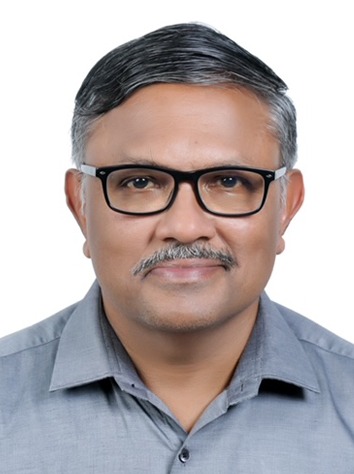
Dr. Oommen Tharakan K.T
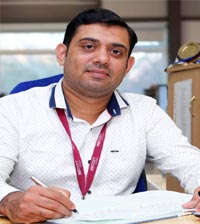



Facilities - Overall description
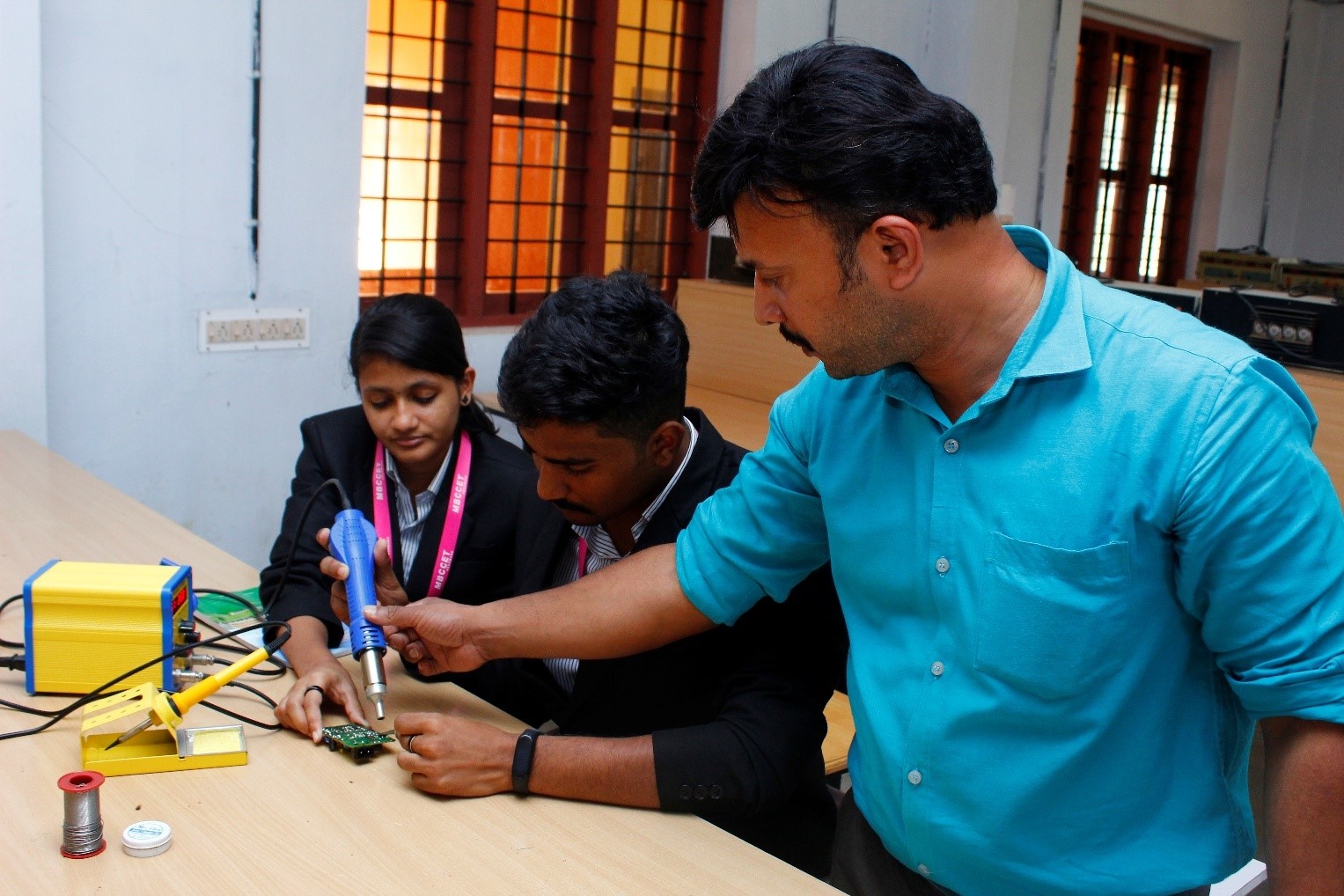
The department has well established infrastructure facilities to meet all challenges of the engineering field. All the laboratories are well equipped with necessary hardware and software resources to meet the curriculum and to provide opportunities for additional learning. The well trained and experienced technical staffs provide practical skills to the students to excel in core electronics engineering companies.
| Sl. No. | Laboratory Details | Faculty In Charge |
| 1 | Fabrication Workshop | Prof. Anu Mary Mathew Mr. Bobby George |
| 2 | Circuits Lab | Prof. Nimisha George Ms. Julimol Joy |
| 3 | Digital Lab | Prof. Tom J Kuriakose Ms. Julimol Joy |
| 4 | Communication Lab | Prof. Thushara Mathew Mr. Bobby George |
| 5 | Systems Lab | Prof. Suma Grace J Mr. Bobby George |
| 6 | Communication engineering lab | Mr. Bobby George |
| 7 | Microcontroller lab | Mr. Bobby George |
Additional Facilities
|
Sl. No. |
Name of the Facility |
Details |
Purpose for creating facility |
Utilization |
|
1 |
Wi-Fi |
400
Mbps speed |
Wireless access of internet |
Can
access Wi Fi from anywhere anytime in the campus |
|
2 |
Project lab |
Provides students with high quality environment to
bring out their skills in their respective areas of project |
Facility provided for both students and staff for
services related to real world project. |
100% |
|
3 |
PCB Fab Lab |
To provide basic
knowledge on PCB design and Fabrication |
PCB design
training with two levels of projects to train students and do Fabrication |
100% |
|
4 |
Matlab
Software |
Control
and Simulation lab |
MATLAB
is a very useful software for electrical engineers specially to check the
response of a circuit before even making it in real. |
Project
Hours |
|
5 |
Common
Computing Centre (CCC) |
60
computers with internet facility |
Common
Internet facility for all students |
12
Hours/day |
|
6 |
White boards |
All labs are equipped with white board |
For explaining experiments |
For
delivering the procedure and steps involved in the design of experiments |
|
7 |
Uninterrupted power supply |
Centralized
UPS with sufficient backup |
Power
backs up |
Power
back up |
|
8 |
Generators |
160kVA, 160KVA Generators
in the campus |
Frequent
Power failure |
Demonstration
of substation and generating unit |
|
9 |
65-Inch
Display Screen in Project Lab |
Full HD/4K Smart Display, 65”,
HDMI/VGA/USB, Wi-Fi, wall-mounted, inbuilt speakers |
To
enhance project presentation, simulation visibility, and facilitate
interactive learning
|
Project
reviews, simulation demos, programming logic demonstrations, workshops,
seminars, and interactive classroom sessions |
Lab Name, details and photos
|
Sl. No. |
Laboratory Details |
Faculty in Charge |
|
1 |
Fabrication Workshop |
Prof. Anu Mary Mathew |
|
Mr. Bobby George |
||
|
2 |
Circuits Lab |
Prof. Nimisha George |
|
Ms. Julimol Joy |
||
|
3 |
Digital Lab |
Prof. Tom J Kuriakose |
|
Ms. Julimol Joy |
||
|
4 |
Communication Lab |
Prof. Thushara Mathew |
|
Mr. Bobby George |
||
|
5 |
Systems Lab |
Prof. Suma Grace J |
|
Mr. Bobby George
|
||
|
6 |
Communication
engineering lab |
Mr. Bobby George
|
|
7 |
Microcontroller
lab |
Mr. Bobby George
|
Department Library
Department library of Electronics and Communication Engineering has a wide collection of text books, periodicals, journals and other resources to help the staff and students in teaching and learning. Over 300 text books of national and international authors in the area of Analog and Digital Electronics, Signal Processing, Communication Engineering, VLSI and Embedded systems, Power Electronics, Microprocessor and Microcontrollers, Applied Electronics, Electrical Technology are available in our library. Manuals and CD’s and Non-departmental books enriches our collection. The library has back up volumes of the previous year university question papers, seminar reports and project reports for reference purposes. The library is situated in the second floor of main block and is accessible to staff and students from 9:00 am to 4:30 pm on all working days.
Department Library In-Charge: Prof. Chinsu K Vijayan
B. Tech Regulations, Curriculum & Syllabus-2024
|
TITLE |
DOCUMENT |
|
B. Tech Academic Regulations 2024 |
|
|
B. Tech Curriculum 2024 |
|
|
S1 & S2 B. Tech (2024)
Syllabus |
Download B. Tech_2024_1st Year Syllabus_Group-B_1773307380.pdf |
|
S3 & S4 B.Tech (2024) Syllabus | |
|
S5 & S6 B.Tech (2024) Syllabus |
|
|
S7 & S8 B.Tech (2024)
Syllabus |
B. Tech Regulations, Curriculum & Syllabus-2019
|
TITLE |
DOCUMENT |
|
B. Tech Academic Regulations 2019 |
|
|
B. Tech Curriculum 2019 |
|
|
S1 & S2 B. Tech (2019)
Syllabus |
|
|
S3 & S4 B.Tech (2019)
Syllabus |
|
|
S5 & S6 B.Tech (2019) Syllabus |
|
|
S7 & S8 B.Tech (2019)
Syllabus |
Academic Calendars:
- Download B. Tech _S1_Aug2025_Dec_2025.pdf
- Download B. Tech _S2_Jan-May 25.pdf
- Download B. Tech _S4_S6_S8 Dec 24-May 25.pdf
- Download B. Tech S2_jan 26-June 26.pdf
- Download B. Tech S3_S5_S7 July 2025 to Dec 2025.pdf
- Download B. Tech S4,S6,S8 Dec 25-June 26.pdf
- Download B.Tech S2 Jan 2026 – June 2026.pdf
- Download B.Tech S4_S6_S8 December 2025 – June 2026.pdf
- Download B.Tech_S1 Sept 2023 - Jan 2024.pdf
- Download B.Tech_S2_S4_S6_S8 Jan 2024 - June 2024.pdf
- Download B.Tech_S3_S5_S7_July 2024 - Dec 2024.pdf
- Download Btech_S1_July_2024_Dec_2024.pdf
- Download BTech_S3_S5_S7 July 2023 - Jan 2024.pdf
Course Outcomes of 2019 Scheme
Course Outcomes of 2024 Scheme
2026
|
Sl. No. |
Date |
Title |
|
1 |
5th to 10th January |
EDGE AI and computer Vision Boot camp |
2025
|
Sl. No. |
Date |
Title |
|
1 |
1st to 5th December |
RP2040-Embedded Systems Boot camp |
|
2 |
7th March 2025 |
EL FIESTA 2025 |
2024
|
Sl. No. |
Date |
Title |
|
1 |
18th December 2024 |
Hands-on Session: Exploring Arduino and IoT with Sensor Interfacing |
|
2 |
17th December 2024- 19th December 2024 |
Workshop on PCB Design and Embedded Systems |
|
3 |
19th October 2024 |
Technical Talk on Role of Embedded Systems in EV |
|
4 |
8th August 2024 |
Technical Talk on Job Opportunities in the Era of AI |
|
5 |
5th April 2024 to 6th April 2024 |
Department Technical Events as part of Swastika'24 |
|
6 |
22nd March 2024 |
Industrial Visit to KELL |
|
7 |
19th February 2024 |
Workshop on "Mastering PCB Design and Production using Proteus Software" |
2023
|
Sl. No. |
Date |
Title |
Details |
|
1 |
6th December 2023 |
EL FIESTA 2023 |
Report on EL FIESTA 2023(2).pdf |
|
2 |
28th October 2023 |
Technical Talk on Electronics-Centric Advancements |
Tech_Invited_Talk.pdf |
|
3 |
26th October 2023 to 27th October 2023 |
Hands-On Experience in Assembling LEDs |
led workshop.pdf |
|
4 |
11th September 2023 to 15th September 2023 |
Add-on Course on 'Basics of Python, Object-Oriented Programming, and Tkinter GUI' |
addon course python.pdf |
2021
|
Sl. No. |
Date |
Title |
Details |
|
1 |
04-10-2021 – 10- 10-2021 |
Workshop on Machine learning using Python |
python ml 25 to 31 oct.pdf |
|
Sl. No. |
Name of faculty |
Project Title |
Category |
|
1. |
Dr.Oommen
Tharakan K T |
Smart
Beehive Monitoring System Using IoT and Sensor Integration for Real-Time
Colony Health Assessment |
Working model |
Sponsored Research Project
|
S.N. |
PI name |
Project title |
Name of the Funding agency |
Duration of the project |
Amount (Lacs) |
|
1 |
Dr.
Rahul Krishnan |
Design
and Development of Dielectric Resonator Antenna for Non-Invasive Blood
Glucose monitoring Sensor |
KTU |
3
Years |
1.2 |
Institution Seed Money or Internal Research Grant to its Faculty for Research Work
|
S.N.
|
Faculty name |
Project title/ Support
for Activity |
Duration |
Outcomes of the project |
|
1 |
Anu Mary Mathew |
Autonomous Tea Harvester |
6 Months |
A functional prototype of an autonomous
tea-harvesting system which shows how automation can reduce labour shortages,
support local agriculture, and promote sustainable farming practices through
optimized resource use. |
|
2 |
Elias Janson K |
Trimbot |
6 Months |
A working prototype capable of moving
independently, detecting obstacles, and cutting grass efficiently in an open
or semi-structured environment which promotes eco-friendly maintenance of
green spaces through energy-efficient automation. |
|
1 |
Vishnu V Gopi |
Portable and foldable electric Scooter for Smart Cities |
6 Months |
A fully functional prototype that is
lightweight, compact, and easy to fold and suitable for smart city
environments. |
|
2 |
Tom J Kuriakose |
Agro
Farming Robot |
6 Months |
A working model that improves efficiency,
and provides a low-cost technological solution for small and medium farmers. |
|
|
TITLE OF THE PAPER |
YEAR OF PUBLICATION |
NAME OF THE JOURNAL/CONFERENCE |
|
1 |
A Blind-Friendly Navigation System Integrating RFID Technology for Enhanced Accessibility in Public Transportation |
2024 |
International Journal on Emerging Research Areas(IJERA) |
|
2 |
IoT based Real Time Patient Health and Medical IV Monitoring System |
2024 |
2025 Emerging Technologies for Intelligent Systems (ETIS) |
|
3 |
A Robust Network Connection Across Internet of Things Devices Inside the Room with Visible Light Communication |
2023 |
2023 International Conference on Artificial Intelligence and Knowledge Discovery in Concurrent Engineering (ICECONF) |
|
4 |
A One-Dimensional Convolutional Neural Network and Long Short-Term Memory Model for Limb Movement Detection |
2023 |
2023 International Conference on Artificial Intelligence and Knowledge Discovery in Concurrent Engineering (ICECONF) |
|
5 |
Intruder Alert System in Smart Home based on IoT Technique |
2023 |
2022 International Conference on Power, Energy, Control and Transmission Systems (ICPECTS) |
|
6 |
Slotted Hexagonal Ultra wideband Micro strip antenna for Telemetry Applications |
2023 |
2023 4th International Conference on Signal Processing and Communication (ICSPC) |
|
7 |
An Energy Efficient Cluster Routing Protocol for Wireless Networks based on Blended Optimization Technique |
2023 |
2023 International Conference on Artificial Intelligence and Knowledge Discovery in Concurrent Engineering (ICECONF) |
|
8 |
A Novel and Robust Sensing Technique Under Cooperative Schemes of IoT based Industrial WSN in Real Time |
2023 |
2023 International Conference on Artificial Intelligence and Knowledge Discovery in Concurrent Engineering (ICECONF) |
|
9 |
Design of Elliptical to Circular Dielectric Resonator Antenna for Microwave Imaging Applications |
2022 |
2022 International Conference on Power, Energy, Control and Transmission Systems (ICPECTS) |
|
10 |
A Hybrid Security Model for the Protection of Diagnostic Text Data in Medical Images over Internet of Things |
2022 |
2022 Sixth International Conference on I-SMAC (IoT in Social, Mobile, Analytics and Cloud) (I-SMAC) |
|
11 |
LI-FI based Industrial Safety Module |
2021 |
2021 5th International Conference on Computing Methodologies and Communication (ICCMC) |
|
12 |
Physical Layer Secure Network Coding in Cognitive Radio Networks |
2020 |
International Research Journal of Modernization in Engineering Technology and Science |
|
13 |
K-N Secret Sharing Scheme Encrypting Multiple Images in Visual Cryptography |
2020 |
International Journal of Science and Research (IJSR) |
The Department
of Electronics and Communication Engineering at Mar Baselios Christian College
of Engineering and Technology has signed Memoranda of Understanding (MoUs) with
leading industry partners to strengthen academic collaboration and promote
research and development activities.
An MoU has been
signed with VI Micro Systems Pvt. Ltd., Electronic
Estate, Perungudi, Chennai, on 24 October 2025 for academic collaboration and
joint research and development initiatives. This partnership
is expected to provide students and faculty with opportunities to engage with
industry-relevant technologies and practical applications.

The department has also entered into an
MoU with Verdent Telemetry and Antenna Systems Pvt. Ltd.,
Ernakulam, on 6 Novemeber 2025. The collaboration focuses on research and
development, training and skill development, infrastructure and resource
sharing, strengthening the industry–academia interface, and fostering mutual
support and professional networking.

These partnerships aim to enhance students’ technical skills, support innovative research, and bridge the gap between academia and industry.
Association of Electronics and Communication Engineers (AZTECS)
This is an association body comprising of students and faculty of Electronics and Communication Engineering Department. This was formed to instil and create an awareness among its members about the latest development and trends occurring in the technical field. The association conducts various workshops, project exhibitions and seminars by eminent personalities throughout the year. It provides a platform for students to show case their ideas, skills and exhibit their project models
Department
alumni are very active with its proud members duly represented by passed out
students from every batch from the beginning and the teaching faculty member.
Department alumni is coordinated by Prof. Syamol Saseendran. Alumni
make every effort to strengthen industry institute tie-ups, exposure visits,
project works and placements to the benefit of the students.
|
Si. No |
Event |
Date |
|
1 |
Technical talk on “ Role
of Embedded Systems in EV ” |
19/10/2024 |
|
2 |
Alumni Talk on " Key
Software Skills and Career Opportunities " |
27/09/2024 |
|
3 |
Carrier
Empowerment Program on " Job Opportunities
in the Era of AI" |
08/08/2024 |
|
4 |
Technical
talk on “Automotive World and Electric Vehicles” |
28/10/2023 |