
Electrical & Computer Engineering
The Department of Electrical & Electronics Engineering was started in 2002 with an annual intake of 60 students. Staffed with the right proportion of senior and experienced professors on one hand, and young and vibrant faculty on the other, the department fathoms the alerting needs of society through research projects and industry-institute interaction. The majority of the department's graduates are employed in electronic, communication, computer, power, oil & petro-chemical and consulting industries. Excellent lab facilities are provided to familiarize all necessary equipment and tools in a detailed manner under this stream.
Regular seminars and industry interaction programmes organised by the department help students gain a better understanding of modern technological trends and developments. The committed faculty and staff are fully geared up to deliver the best electrical engineers with core technical knowledge as well as professional skill, by offering value-added educational experience through quality instruction. The primary objective of this department is to deliver the best electrical engineers emphasising their role in research, design, implementation and improvement of electrical systems — with an acuity in issues including teamwork, leadership, safety, ethics, service and economics in professional organisations.
Highlights
- Annual intake of 60 students with a balanced faculty of experienced professors and young researchers under two courses.
- Well-equipped laboratories providing hands-on experience with modern equipment and tools.
- Active industry-institute interaction through regular seminars, workshops and conferences.
- Meticulously planned layout and demonstration boards to impart practical, hands-on experience with modern electrical and electronics equipment.
- Consistently top performance in university examinations, reflecting the department's commitment to academic excellence and rigorous instruction.
- Robust linkages with leading companies through internships, visits and collaborative projects; bridging academia and the real world.
- IEEE, IEEE-PES, IEI and ISTE student chapters, along with an active Electrical Association, provide rich extra-curricular learning opportunities.
- E-learning, Energy Conservation and Design clubs keep students engaged beyond the classroom, fostering creativity and applied learning.
- Regular workshops, seminars and national/international conferences empower both students and professionals with the latest technological insights.
- Graduates secure placements in core electrical and electronics industries across India and abroad, with strong alumni networks in multiple sectors.
- Evolving appropriate, sustainable technologies for rural needs, the department actively engages with communities to create meaningful, lasting impact.
- An Alumni Scholarship programme supports meritorious students, ensuring that talent is recognised and financial barriers never come in the way of excellence.
Courses and Intake Capacity
The Department of Electrical & Electronics Engineering at Mar Baselios Christian College of Engineering & Technology offers an undergraduate program designed to equip students with strong theoretical foundations and practical skills in Electrical & Electronics Engineering.
Programme Offered
- Bachelor of Technology (B.Tech) in Electrical & Electronics Engineering
Intake Capacity
The approved intake for the B.Tech Electrical & Electronics Engineering program is 30 students per academic year.
Programme Highlights
- Curriculum structured as per the guidelines of APJ Abdul Kalam Technological University (KTU)
- Covers core subjects: Thermodynamics, Fluid Mechanics, Manufacturing Engineering, Machine Design, Heat Transfer, CAD/CAM and Automation
- Emphasis on laboratory-based learning, project work and internships, industry exposure and training
- Integrates both theoretical knowledge and hands-on practical experience, ensuring students are industry-ready
Career Opportunities
- Manufacturing and production industries
- Automotive and aerospace sectors
- Energy and power industries
- Design and simulation fields
- Higher studies and research
Optional: Hostel Fees
₹6,500 / month (Includes accommodation & mess)
One-time deposit: ₹10,000 (Refundable)
Mission
Impart fundamental concepts to each student to take up challenging engineering problems — building a foundation that powers every innovation, every solution, every career.
Ensure effective learning through quality teaching and proper assessment to achieve the graduate attributes — creating engineers who don't just pass examinations, but truly understand and apply knowledge.
Establish state-of-the-art support facilities to encourage research and to undertake innovative projects — providing the infrastructure, tools and mentorship that turn curiosity into breakthrough
Enrich students with strong interpersonal and managerial skills with professional ethics — so they are equipped to lead teams, navigate challenges, and uphold integrity in every professional setting.
The Department of Electrical & Electronics Engineering, MBCCET — building engineers who are technically sharp, ethically grounded, and ready to serve society with purpose since 2002.
Vision
To emerge as an excellent department bringing forth professionally competent and socially committed Electrical and Electronics Engineers. We strive to be recognised not just for academic excellence, but for producing graduates who are grounded in ethics, driven by purpose, and equipped to make a meaningful difference — in industry, in research, and in the communities they serve.
Program Educational Objectives (PEOs)
are broad statements that describe the career and professional accomplishments
that the programme is preparing graduates to achieve within a few years after
graduation. The EEE Department at MBCCET has defined three focused objectives
that guide every aspect of curriculum design, teaching and assessment.
PEO1: Make strong presence on a global platform to take up their professional career.
PEO2: Engage in continuous upgradation of their professional knowledge.
PEO3:Become innovator, entrepreneur, researcher and /or team leader.
PSO1 - Design & Test: Design, analyze, and test components and systems associated with electrical engineering using modern hardware and software tools — applying theoretical knowledge to practical implementation with proficiency in industry-standard simulation and design environments.
PSO2 - Electronic Systems: Specify and design electronic systems that perform control, analog and digital signal processing functions — bridging the gap between classical electrical engineering and modern electronics to build integrated, intelligent systems.
Engineering graduates of the EEE Department will be able to demonstrate
the following twelve program outcomes, aligned with the NBA graduate attributes
framework. These outcomes define the knowledge, skills and attitudes that every
graduate is expected to possess upon completion of the B.Tech programme.
PO1 - Engineering Knowledge: Apply the knowledge of mathematics, science, engineering fundamentals, and an engineering specialization to the solution of complex engineering problems.
PO2 - Problem Analysis: Identify, formulate, review research literature, and analyze complex engineering problems reaching substantiated conclusions using first principles of mathematics, natural sciences, and engineering sciences.
PO3 - Design / Development of Solutions: Design solutions for complex engineering problems and design system components or processes that meet specified needs with appropriate consideration for public health, safety, cultural, societal and environmental factors.
PO4 - Conduct Investigations: Use research-based knowledge and research methods including design of experiments, analysis and interpretation of data, and synthesis of the information to provide valid conclusions.
PO5 - Modern Tool Usage: Create, select, and apply appropriate techniques, resources, and modern engineering and IT tools including prediction and modeling to complex engineering activities with an understanding of the limitations.
PO6 - The Engineer and Society: Apply reasoning informed by contextual knowledge to assess societal, health, safety, legal and cultural issues and the consequent responsibilities relevant to the professional engineering practice.
PO7 - Environment & Sustainability: Understand the impact of professional engineering solutions in societal and environmental contexts, and demonstrate the knowledge of, and need for sustainable development.
PO8 - Ethics: Apply ethical principles and commit to professional ethics and responsibilities and norms of the engineering practice.
PO9 - Individual and Team Work: Function effectively as an individual, and as a member or leader in diverse teams, and in multidisciplinary settings.
PO10 - Communication: Communicate effectively on complex engineering activities with the engineering community and with society at large — comprehending and writing effective reports, making effective presentations, and giving and receiving clear instructions.
PO11 - Project Management and Finance: Demonstrate knowledge and understanding of the engineering and management principles and apply these to one's own work, as a member and leader in a team, to manage projects and in multidisciplinary environments.
PO12 - Life-long Learning: Recognize the need for, and have the preparation and ability to engage in independent and life-long learning in the broadest context of technological change.
The DQAC is the department's internal compass, guiding faculty,
curriculum, and processes toward consistent quality and academic distinction.
| Name | Position | Organisation | Contact |
| Dr. V. I. George | Principal | MBC College of Engineering & Technology | 9448548101 |
| Mr. Resmara S | Head of Department – EEE | MBC College of Engineering & Technology | 9446224393 |
| Mr. Griesh R | Associate Professor | MBC College of Engineering & Technology | 8289860079 |
| Ms. Fini Fathima | Associate Professor | MBC College of Engineering & Technology | 9497821051 |
| Dr. Bincy K Jose | Associate Professor | MBC College of Engineering & Technology | 9495247863 |
Department Advisory Board (DAB) is
constituted with the following members for the development and progress of the
Electrical and Electronics Engineering Department for the academic year
2025–2026.
| Name | DAB Role | Designation & Organisation | Contact |
| Dr. V. I. George | Chairman | Principal MBC College of Engineering | 9448548101 Principal@mbcpeermade.com |
| Mr. Resmara S | Convener | Head of Department / EEE MBC College of Engineering | 9446224393 drvigeorge@mbcpeermade.com |
| Ms. Sneha Priya Sebastian | Member | Associate Professor MBC College of Engineering | 9497202889 snehapriyasebastian@mbcpeermade.com |
| Dr. Bincy K Jose | Member | Assistant Professor MBC College of Engineering | 9495247863 drbincykjose@mbcpeermade.com |
| Mrs. Fini Fathima | Member | Associate Professor MBC College of Engineering | 9497821051 finifathima@mbcpeermade.com |
| Dr. Boby George | Academic Representative | Professor IIT Madras | 9445485273 boby@ee.iitm.ac.in |
| Dr. Sunil Kumar P.R | Academic Representative | Professor RIT Kottayam | 9447806446 Sunil_thodupuzha@rit.ac.in |
| Dr. Biju K | Academic Representative | Head of Department – EEE Munnar College of Engineering | 9446808243 bijuk@ieee.org |
| Mr. Benet George V | Industry Representative | Founder & Chief Consultant Bigeta Energy Solutions LLP, Bangalore | 9900591000 benet@bigetaenergy.com |
| Ms. Safia Varghese | Alumni Representative | Office Manager Soleco Energy Pvt Ltd, Ernakulam | 8075669609 safia.varghese33@gmail.com |
| Mr. Joji Edakunnel | Parent Representative | 7510105865 jojigeorgeedakunnel11@gmail.com | |
| Ms. Athulya Sudarshan | Student Representative | S7 – Electrical & Electronics Engineering MBC College of Engineering | 6238789008 athulyasudarshan008@gmail.com |
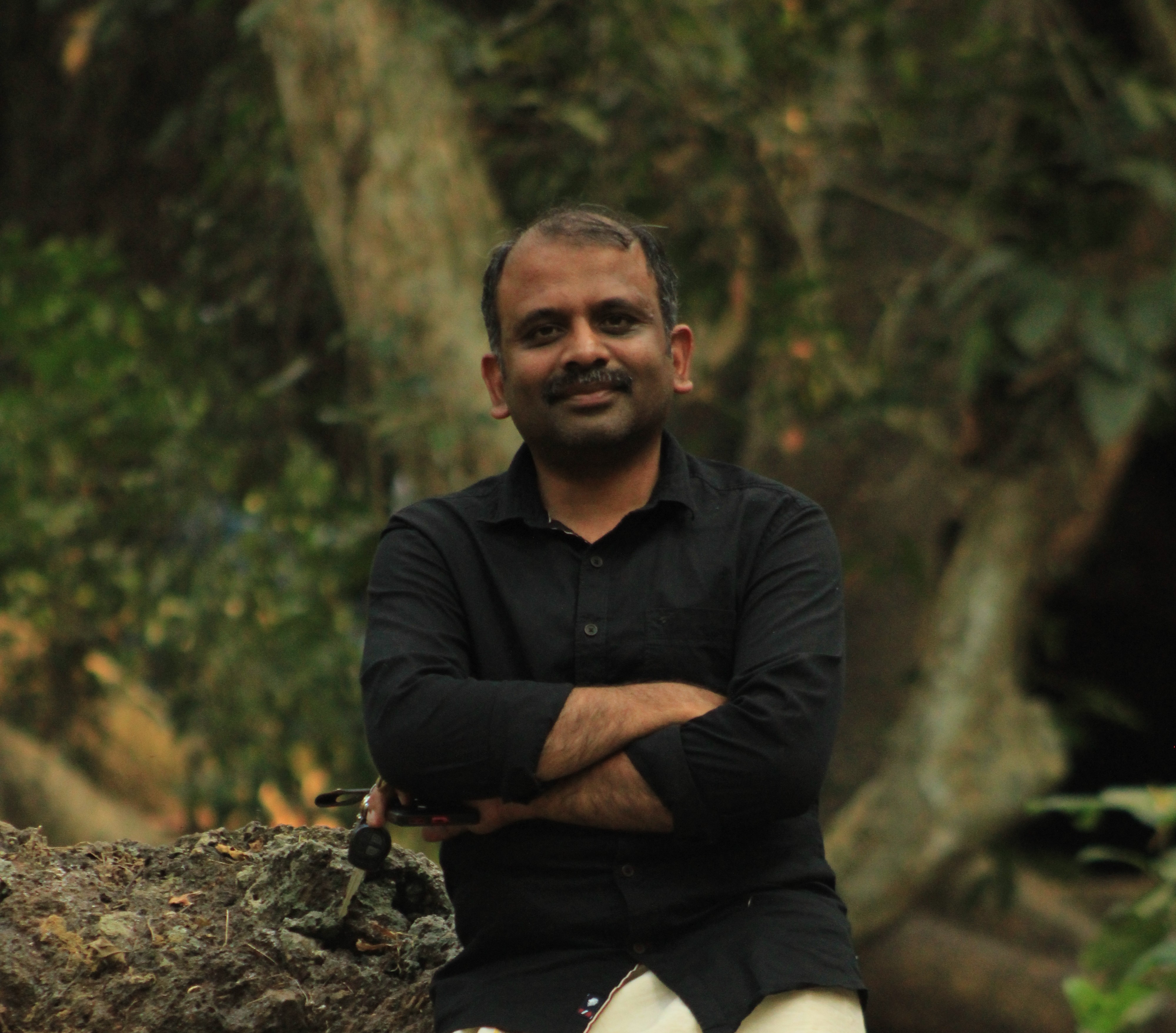
Prof. Resmara S









Facilities - Overall description
The Department of Electrical & Electronics Engineering is equipped with state-of-the-art laboratory facilities that support both academic learning and research activities. The department emphasizes hands-on training, simulation-based learning, and industry-oriented skill development. Students are provided exposure to:
• Modern engineering tools and equipment
• Advanced design and simulation software
• Practical training aligned with industry standards
The department also promotes:
• Innovation through project work
• Use of open-source and commercial software tools Skill development in emerging technologies
Student Exposure
- Modern engineering tools and equipment
- Advanced design and simulation software
- Practical training aligned with industry standards
Department Initiatives
- Innovation through project work
- Use of open-source and commercial software tools
- Skill development in emerging technologies
Lab Name, details and photos
- CAD/CAM Laboratory
- Equipped with design and simulation software
- Includes CNC machines for manufacturing applications
- Technical Systems Laboratory
- Used for understanding mechanical systems and mechanisms
- Manufacturing / Workshop Labs (I &II)
- Provide hands-on experience in machining and fabrication
- Thermal Engineering Labs
- Used for experiments related to thermodynamics and heat transfer
- Fluid Mechanics Lab/Hydraulic Machines Lab
- Supports analysis of fluid flow systems
- Mechanical Work Shop
- CNC Turning Lathe
- Advanced machining tools
- Experimental setups for core subjects
Department Library
The Department Library of the Department of Electrical & Electronics Engineering at Mar Baselios Christian College of Engineering & Technology serves as a valuable academic resource center for students and faculty. It is designed to support learning, teaching, and research activities within the department.
Facilities and Resources :
• Collection of core textbooks covering all major Electrical & Electronics Engineering subjects
• Availability of reference books for advanced study and competitive exams
• Access to previous year question papers and study materials
• Manuals and lab records for practical courses Selected journals and magazines related to engineering and technology
Key Features:
• Supports both curriculum-based learning and self-study
• Provides easy access to subject-specific materials within the department
• Acts as a quick reference center for projects and seminars
• Maintained and updated periodically as per syllabus requirements Utilization
• Used by students for Exam preparation, Assignments and seminars, Mini and major project work
• Used by faculty for Teaching support, Research and content development
Significance :
The Department Library complements the central library by providing immediate access to essential academic resources, thereby enhancing the overall teaching-learning process within the department.
Facilities and Resources
- Collection of core textbooks covering all major Electrical & Electronics Engineering subjects
- Availability of reference books for advanced study and competitive exams
- Access to previous year question papers and study materials
- Manuals and lab records for practical courses
- Selected journals and magazines related to engineering and technology
Key Features
- Supports both curriculum-based learning and self-study
- Provides easy access to subject-specific materials within the department
- Acts as a quick reference center for projects and seminars
- Maintained and updated periodically as per syllabus requirements
Utilization
- Students: Exam preparation, assignments and seminars, mini and major project work
- Faculty: Teaching support, research and content development
The Department Library complements the central library by providing immediate access to essential academic resources, thereby enhancing the overall teaching-learning process within the department.
The curriculum of the Electrical & Electronics Engineering program at Mar Baselios Christian College of Engineering & Technology is designed in accordance with the guidelines of APJ Abdul Kalam Technological University (KTU). It provides a balanced blend of fundamental sciences, core Electrical & Electronics Engineering subjects, and advanced specialized courses.
The curriculum emphasizes both theoretical knowledge and practical application through laboratory work, workshops, and project-based learning. It is periodically updated to incorporate emerging technologies and industry requirements, ensuring that students are equipped with relevant skills and competencies.
- Opportunities for internships, seminars, and interdisciplinary learning
- Fosters innovation, critical thinking, and professional development
- Balanced blend of fundamental sciences and advanced courses
- Periodically updated per industry and technology trends
The scheme of the Electrical & Electronics Engineering program at Mar Baselios Christian College of Engineering & Technology is structured as per the guidelines of APJ Abdul Kalam Technological University (KTU), ensuring a systematic progression of courses across semesters with a balanced focus on theory, practical learning, and project work.
To know more about the scheme, please refer to the KTU official website or contact the department.
The Academic Calendar of the Electrical & Electronics Engineering program at Mar Baselios Christian College of Engineering & Technology provides a structured schedule of academic activities, including semester timelines, examinations, holidays, and important academic events, ensuring smooth and effective conduct of the program.
Batch-wise Academic Calenders
The Course Outcomes (COs) of the Electrical & Electronics Engineering program at Mar Baselios Christian College of Engineering & Technology clearly define the specific knowledge, skills, and competencies that students are expected to achieve upon completion of each course. These outcomes are aligned with Outcome-Based Education (OBE) principles, ensuring that students gain strong fundamentals in engineering sciences, problem-solving abilities, design and analysis skills, and practical exposure through laboratories and projects.
The COs collectively contribute to achieving the Programme Outcomes (POs) and Programme Specific Outcomes (PSOs), thereby preparing graduates for professional practice, higher studies, and lifelong learning.
- Lectures – Conceptual and theoretical foundation
- Lab work – Hands-on experimental learning
- Simulation – Virtual modelling and analysis using industry-standard software
- Project-based learning – Real-world problem solving and innovation
Metrics is the official newsletter of the Department of Electrical & Electronics Engineering at Mar Baselios Christian College of Engineering & Technology.
The newsletter serves as a platform to showcase the academic, technical, and extracurricular activities of the department.
Highlights
- Student achievements and accomplishments
- Faculty contributions and research activities
- Workshops, seminars, and technical events
- Innovative projects and initiatives
Metrics plays an important role in promoting communication, creativity, and knowledge sharing among students and faculty, while also documenting the growth and achievements of the department.
The Department of Electrical & Electronics Engineering actively promotes research and consultancy activities among its faculty and students. The department encourages collaborative research with industry partners and academic institutions to address real-world engineering challenges.
Details on ongoing research projects and consultancy engagements will be updated soon.
|
The department maintains strong industrial linkages with various organizations to provide students with exposure to real-world engineering practices, hands-on training, and placement opportunities. These partnerships strengthen the industry-academia connect and enhance the learning experience.
The department maintains strong industrial linkages with various organizations to provide students with exposure to real-world engineering practices, hands-on training, and placement opportunities. These partnerships strengthen the industry-academia connect and enhance the learning experience.