
Computer Science & Engineering
The Department of Computer Science and Engineering was
established in 2002 with an annual intake of 60 students and currently the
department offers an annual intake of 120 students. The department is
strengthened by a balanced team of experienced professors and dynamic young
faculty, working together to address the evolving needs of society through
innovative research, software development, and industry–institute
collaboration.
Regular seminars, workshops, hackathons, and industry
interaction programs enable students to stay updated with the latest
technological trends. The dedicated faculty strive to produce competent
computer engineers equipped with strong technical knowledge and professional
skills, delivering a value-added learning experience through quality education.
The primary objective of the department is to develop skilled computer engineers capable of designing, developing, and improving software and computing systems, while emphasizing teamwork, leadership, ethics, innovation, and problem-solving in professional environments.
Key Highlights
- Annual intake of 60 students supported by a balanced mix of experienced faculty and young researchers across core CSE domains.
- State-of-the-art laboratories in programming, data structures, artificial intelligence, machine learning, cloud computing, and cybersecurity.
- Strong industry–institute interaction through seminars, coding competitions, internships, and collaborative projects.
- Well-designed infrastructure and computing facilities to provide practical, hands-on learning experiences.
- Consistent academic excellence with outstanding performance in university examinations.
- Strong industry linkages with leading IT companies through internships, industrial visits, and joint initiatives.
- Professional student chapters such as coding clubs, tech forums, and innovation cells for co-curricular development.
- Active clubs in coding, open-source development, AI, and entrepreneurship to encourage creativity and innovation.
- Regular workshops, national and international conferences to enhance technical knowledge and research exposure.
- Graduates placed in reputed companies in India and abroad, supported by a strong and active alumni network.
- Focus on developing sustainable and socially relevant technological solutions, including applications for rural and community development.
- Alumni-supported scholarship programs to assist meritorious students and promote inclusive education.
Key SDGs Linked to CSE
1. SDG 4: Quality Education
● Use AI for personalized learning systems
2. SDG 9: Industry, Innovation, and Infrastructure
● Build smart systems, IoT networks, and automation
● Support startups and tech innovation
3. SDG 13: Climate Action
4. SDG 3: Good Health and Well-being
5. SDG 16: Peace, Justice, and Strong Institutions
● Blockchain for transparent governance
6. SDG 6: Clean Water and Sanitation
7. SDG 7: Affordable
and Clean Energy
8. SDG 17: Partnerships for the Goals (CSE Department)
The Department of Computer Science and Engineering strengthens global partnerships through Memorandums of Understanding (MoUs) with leading IT industries, collaborations with All India Council for Technical Education and Kerala State Council for Science, Technology and Environment, participation in international conferences, and engagement with an active alumni network, thereby supporting innovation and sustainable development
Courses and Intake Capacity
Programme Offered
- Bachelor of Technology (B.Tech) in Computer Science & Engineering
Intake Capacity
Optional: Hostel Fees
₹6,500 / month (Includes accommodation & mess)
One-time deposit: ₹10,000 (Refundable)
Inculcate skills to solve complex engineering problems and instill entrepreneurial capabilities.
Equip the students to advance with the recent trends and technology through Research and Innovations in the field of computer science.
Facilitate the development of professional behaviour, ethical values and the spirit of service to the society.
PEO1: Think creatively and critically to solve problems in global context with varying complexity.
PEO2: Exhibit leadership qualities, Ethical Values, managerial and entrepreneurship skills.
PEO3: Contribute inventions and innovative advancements in information technology through life-long learning in a sustainable manner.
After the completion of the course Computer Science & Engineering the graduates will be able to:
PSO1: Apply theoretical and practical knowledge to analyze and model hardware systems with varying complexity.
PSO2: Utilize modern programming platforms, tools and logical reasoning skills to analyze and develop application software.
PSO3: Apply computational and networking skills to solve and develop secure communication environment.
PO1. Engineering Knowledge: Apply the knowledge of mathematics, science, engineering Fundamentals, and an engineering specialization to the solution of complex engineering problems.
PO2. Problem Analysis: Identify, formulate, review research literature, and analyze complex engineering problems reaching substantiated conclusions using first principles of mathematics, natural sciences, and engineering sciences.
PO3. Design/ Development of Solutions: Design solutions for complex engineering problems and design system components or processes that meet the specified needs with appropriate consideration for the public health and safety, and the cultural, societal, and environmental considerations.
PO4. Conduct Investigations of Complex Problems: Use research-based knowledge and research methods including design of experiments, analysis and interpretation of data, and synthesis of the information to provide valid conclusions.
PO5. Modern Tool Usage: Create, select, and apply appropriate techniques, resources, and modern engineering and IT tools including prediction and modeling to complex engineering activities with an understanding of the limitations.
PO6. The Engineer and Society: Apply reasoning informed by the contextual knowledge to assess societal, health, safety, legal and cultural issues and the consequent responsibilities relevant to the professional engineering practice.
PO7. Environment and Sustainability: Understand the impact of the professional engineering solutions in societal and environmental contexts, and demonstrate the knowledge of, and need for sustainable development.
PO8. Ethics: Apply ethical principles and commit to professional ethics and responsibilities and norms of the engineering practice.
PO9. Individual and Team Work: Function effectively as an individual, and as a member or leader in diverse teams, and in multidisciplinary settings.
PO10. Communication: Communicate effectively on complex engineering activities with the engineering community and with society at large, such as, being able to comprehend and write effective reports and design documentation, make effective presentations, and give and receive clear instructions.
PO11. Project Management and Finance: Demonstrate knowledge and understanding of the engineering and management principles and apply these to one’s own work, as a member and leader in a team, to manage projects and in multidisciplinary environments.
PO12. Life-long learning: Recognize the need for, and have the preparation and ability to engage in independent and life-long learning in the broadest context of technological change.
| Sl.No | University | Details |
|---|---|---|
| 1 | KTU 2024 | Available |
| 2 | KTU 2019 | Available |
| 3 | KTU 2015 | Available |
| 4 | MGU | Available |
- Graduates will demonstrate basic knowledge in fundamentals of computing, programming, algorithms and recent technologies.
- Graduates will demonstrate knowledge of fundamentals of hardware technology relevant to understanding computer science basics.
- Graduates will have knowledge of the best practices in software development in industry.
- Graduates will demonstrate capability to work in teams and in professional work environments.
- Graduates will be able to demonstrate their qualities of learning in latest technology.
- Graduates will be able to develop the capability for self- learning.


The Department Quality Assurance Cell (DQAC) serves
as the internal compass of the Computer Science and Engineering (CSE)
department, guiding academic practices, curriculum delivery, and administrative
processes toward continuous quality improvement and excellence.
The DQAC ensures that all academic and institutional
activities align with quality standards and evolving industry requirements,
fostering an environment of accountability, innovation, and academic
distinction.
Key Functions of DQAC in CSE
- Question
Paper Scrutiny :
Reviews internal and university examination question paper.
Ensures alignment with syllabus, course outcomes (COs), and Bloom’s taxonomy
Maintains quality, fairness, and appropriate difficulty levels - Curriculum Feedback & Suggestions to DAB
(Department Advisory Board)
Collects feedback from students, faculty, alumni, and industry expertsRecommends updates to curriculum, syllabus, and teaching methodsSupports inclusion of emerging technologies like AI, ML, and Data Science - Academic Audit & Monitoring
Periodic review of teaching-learning processes
Verification of course files, lesson plans, and outcome attainment
Ensures adherence to academic calendar and quality benchmarks - Department Grievance Committee Support
Addresses student concerns related to academics, evaluation, and facilitiesEnsures transparent and timely resolution of issues Promotes a fair and supportive academic environment - Result
Analysis & Performance Improvement
Analyzes exam results and identifies trends Suggests remedial actions for slow learners Encourages advanced learning for high performers - Quality Enhancement Initiatives
Promotes innovative teaching practices and use of ICT tools
Encourages participation in workshops, FDPs, and conferencesSupports accreditation processes (NBA/NAAC) - Documentation & Compliance
Maintains records of academic activities and quality measures
Prepares reports for audits and accreditation bodies
Ensures continuous improvement through proper documentation
Members
| Sl. No. | Name | Position | Contact |
| 1 | Dr.Ushus Maria Jospeh | HOD | 9846916751 |
| 2 | Prof.Josmy George | Associate Professor | 7034542908 |
| 3 | Prof.Aryalakshmi R | Assistant Professor | 7034542908 |
| 4 | Prof.Nissu Simon | Assistant Professor | 9961977113 |
| 5 | Prof.Shilpa Rajan | Assistant Professor | 8848228145 |
| 6 | Prof.Joju N C | Assistant Professor | 8086491566 |
| Year | Chief Faculty Advisor | Faculty Advisors |
| 2015-2029 | Prof. Josmy George (CSE A) Prof.Joju N C (CSE B) | Prof.Nefla Najeeb O N Prof.Blessy Thomas |
| 2024-2028 | Prof.Nissu Simon (CSE B) | Prof.Amal P Varghese |
| 2023-2027 | Prof.Preethymol B (CSE B) | Prof.Bindumol V S (CSE B) |
| 2022-2026 | Prof.Ans Maria Joseph | Prof.Joju N C |
| 2021-2025 | Prof. Josmy George | Prof. Shilpa Rajan |
| 2020-2024 | Prof.Ushus Maria Joseph | Prof. Nissu Simon Prof. Rahul Ajith Kumar (upto 27-02-2023) |
| 2019-2023 | Prof. Sijimol A S | Prof. Aryalakshmi R |
| 2018-2022 | Prof. Anju Rachel Oommen | Prof.Detty M Panicker |
| 2017-2021 | Prof. Josmy George | Dr Teena Joseph |
| 2016-2020 | Prof. Ushus Maria Joseph | Prof. Pradeep P Mathew |
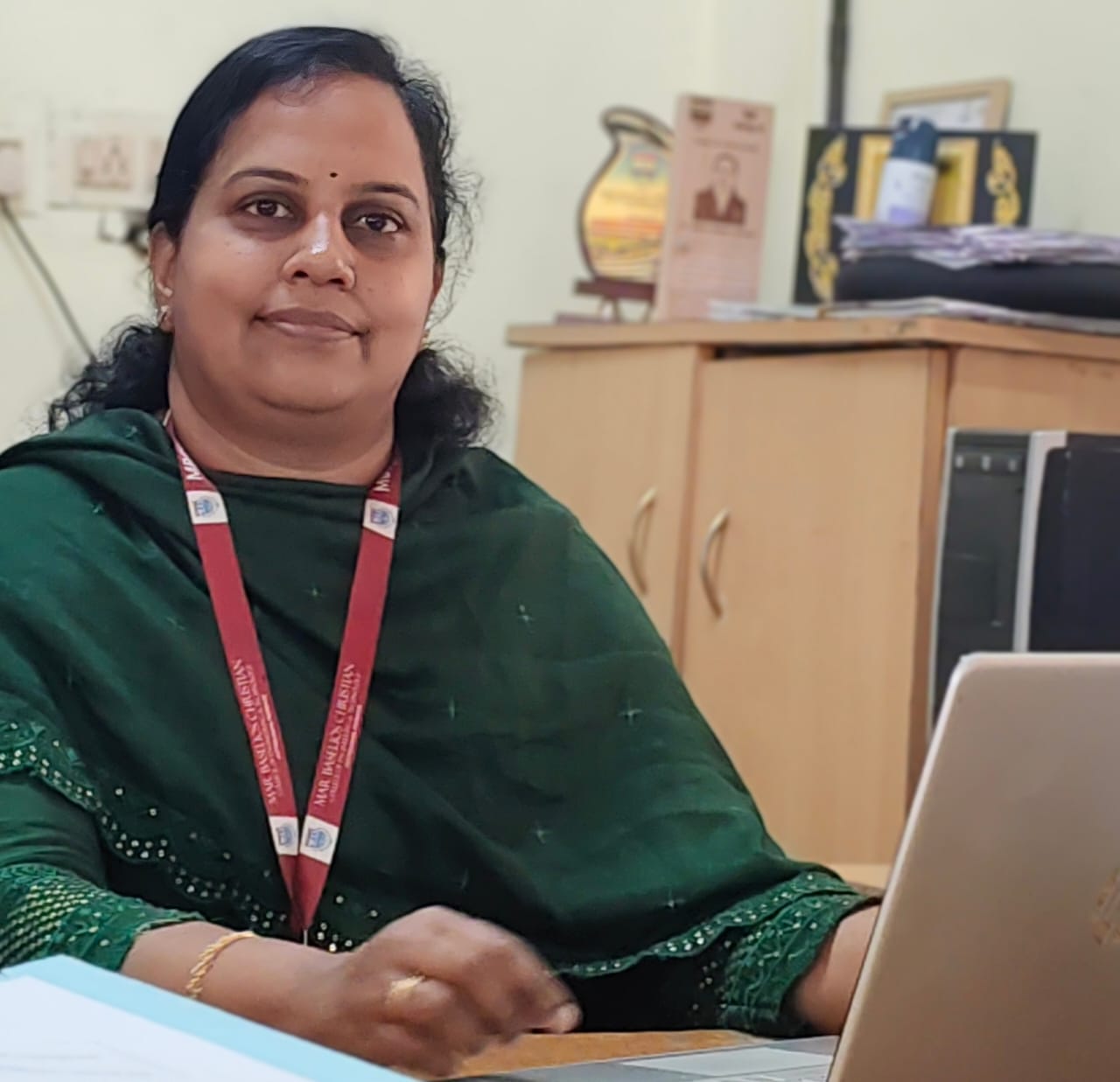
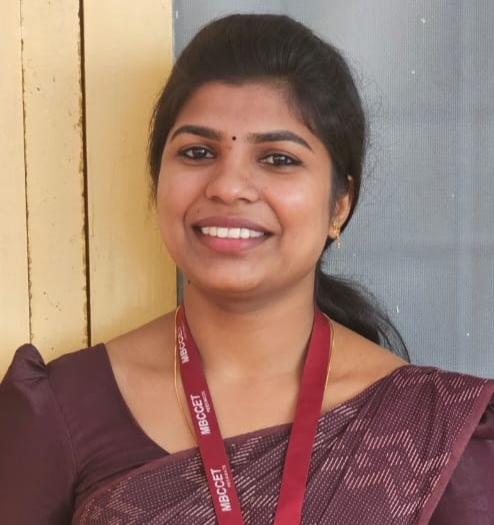
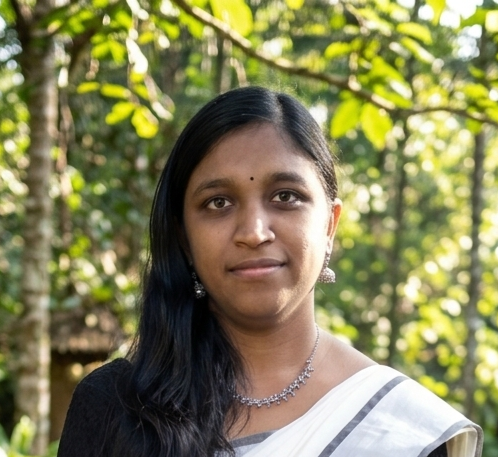
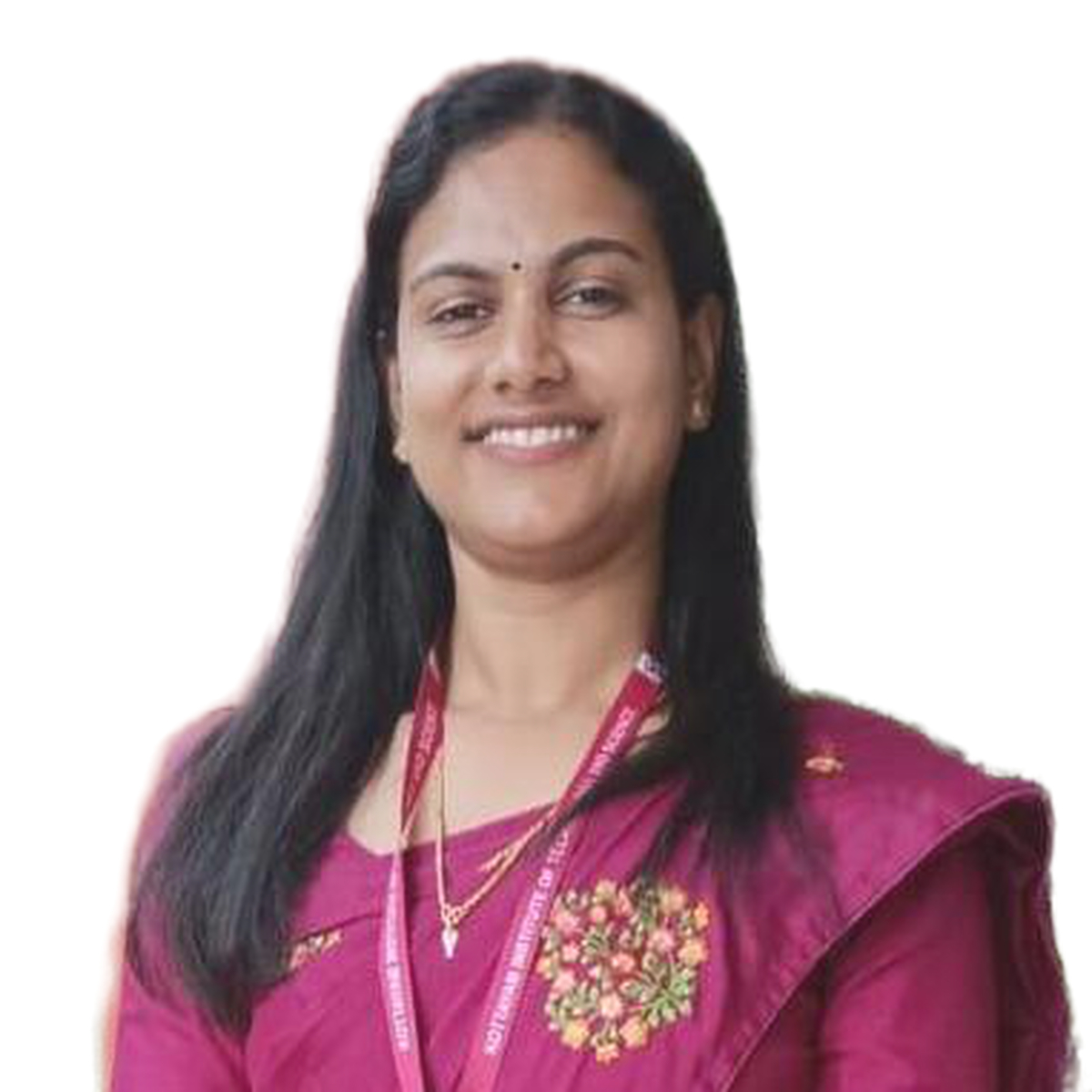
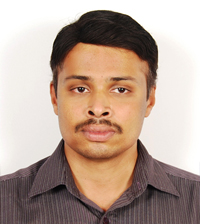
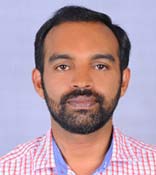
Dr. Ushus Maria Joseph


Facilities - Overall description
The Department of Computer Science & Engineering is equipped with state-of-the-art laboratory facilities that support both academic learning and research activities. The department emphasizes hands-on training, simulation-based learning, and industry-oriented skill development.
Students are provided exposure to:
• Modern engineering tools and equipment
• Advanced design and simulation software
• Practical training aligned with industry standards
The department also promotes Innovation through project work and Use of open-source and commercial software tools
Skill development in emerging technologies
Student Exposure
- Modern engineering tools and equipment
- Advanced design and simulation software
- Practical training aligned with industry standards
Department Initiatives
- Innovation through project work
- Use of open-source and commercial software tools
- Skill development in emerging technologies
Lab Name, details and photos
- CAD/CAM Laboratory
- Equipped with design and simulation software
- Includes CNC machines for manufacturing applications
- Technical Systems Laboratory
- Used for understanding mechanical systems and mechanisms
- Manufacturing / Workshop Labs (I &II)
- Provide hands-on experience in machining and fabrication
- Thermal Engineering Labs
- Used for experiments related to thermodynamics and heat transfer
- Fluid Mechanics Lab/Hydraulic Machines Lab
- Supports analysis of fluid flow systems
- Mechanical Work Shop
- CNC Turning Lathe
- Advanced machining tools
- Experimental setups for core subjects
Department Library
Facilities and Resources
- Collection of core textbooks covering all major Computer Science & Engineering subjects
- Availability of reference books for advanced study and competitive exams
- Access to previous year question papers and study materials
- Manuals and lab records for practical courses
- Selected journals and magazines related to engineering and technology
Key Features
- Supports both curriculum-based learning and self-study
- Provides easy access to subject-specific materials within the department
- Acts as a quick reference center for projects and seminars
- Maintained and updated periodically as per syllabus requirements
Utilization
- Students: Exam preparation, assignments and seminars, mini and major project work
- Faculty: Teaching support, research and content development
- Opportunities for internships, seminars, and interdisciplinary learning
- Fosters innovation, critical thinking, and professional development
- Balanced blend of fundamental sciences and advanced courses
- Periodically updated per industry and technology trends
| Sl.No | University | Details |
|---|---|---|
| 1 | KTU 2024 | Available |
| 2 | KTU 2019 | Available |
| 3 | KTU 2015 | Available |
| 4 | MGU | Available |
2016
2017
2018
2019
2020
2022
2023
Highlights
- Student achievements and accomplishments
- Faculty contributions and research activities
- Workshops, seminars, and technical events
- Innovative projects and initiatives
| Sl.No | Name | Status |
|---|---|---|
| 1 | Metrics 2019 | Available |
| No | Industry | Date | Area of Collaboration |
|---|---|---|---|
| 1 | CAD Point Authorized training centre, Kuttikkanam | 10/11/2023 | Collaboration with Department of Computer Science & Engineering. a) Training for students b) Provide practical exposure to 3D assemblies and 2D documentation. |
| 2 | Kerala Development and Innovation Strategic Council - KDISC | 29/02/2024 | Collaboration with Department of Computer Science & Engineering. a) Analyse industry trends, technological advancements and market demands to ensure skill development programs align with industry needs in Kerala context as well as globally. b) Creation of industry-relevant curriculum and competency-based training programs with support of associated industries. c) Established industry standards and benchmarks to conduct skill assessment for certification |
| 3 | Inter -CAD systems , PVT Limited, Kochi | 7/8/2024 | Provides training in Auto-CAD, Revit, MEP, STAAD , Primavera |
| 4 | Arcite Educational Solutions Pvt Ltd. | 6/10/2023 | Provides training on Sustainable engineering and green building concepts. Immense supports for internships ,placements and self-branding of students. |
| 5 | CILL Associates private Ltd | 26/10/2023 | Provides industrial training for students, joint research activities in the field of Land Survey Engineering using modern machines and technology |
Rising Engineers Association of Computer Science and Technology (REACT)
REACT, an association consisting of student and faculty members of the department is functioning fully fledge in campus. REACT is coordinated by the Department of Computer Science. It is intended to provide a platform for the students to get an exposure to the latest technologies. Talks by experts, quiz competition, inter collegiate Tech fests, Technical Exhibition along with non-technical events such as cricket tournament are the major activities of REACT.
